Conversion Ratio Metrics
Description
Conversion metrics quantify the percentage of visitors progressing through different stages of the shopping experience.
| Element | Detail |
|---|---|
| Description | Conversion metrics quantify the percentage of visitors progressing through different stages of the shopping experience. Examples include: • Conversion of visitors to completed transactions • Conversion of passersby in the mall to store entries • Conversion of visitors using fitting rooms • Conversion of visitors reaching the checkout • …and other similar indicators. |
| Algorithm | 1. Event capture • Visitors: all unique store entries are registered (counting and filtering clients at entrances). • Conversions: events that define conversion are recorded (e.g., payment transaction, fitting room entry, etc.). 2. Filtering and cleaning • Exclude undesired repetitions (same client counted multiple times in the same period, staff, etc.). 3. Temporal grouping • Define the calculation interval (day, week, month). • Assign each visitor and conversion event to its corresponding period. 4. Totals computation • V = total number of unique visitors in the period. • C = total number of conversions in the period. 5. Ratio calculation • Conversion = C/V (×100 %) |
| Typical Use Cases | • Sales conversion tracking • Processes and tools to increase conversion |
Visual explanation
| Visual Explanation | 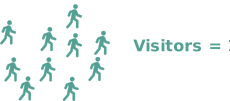 | 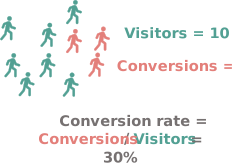 |
|---|---|---|
| Description | 1. Unique visitors are counted | 2. Conversion is calculated as the division between Conversion events (transactions, fitting room entry, etc.) and Visitors |